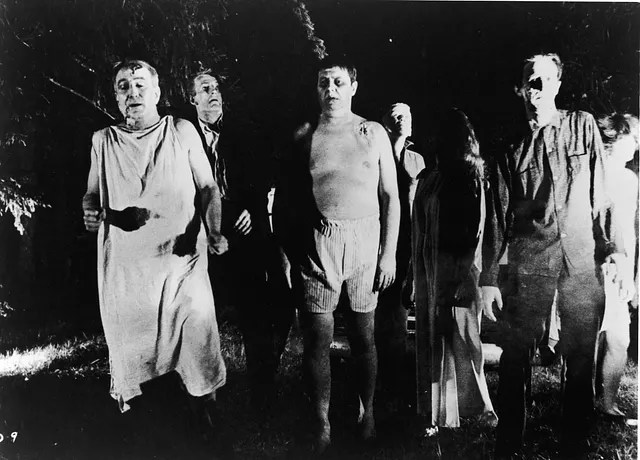
Zombies were once (and still are) a horror icon. Though you’d be hard-pressed to find someone willing to name them in their top ten fears.
First, let’s talk about their common portrayal in media.
They are usually the result of a pathogen that resurrects the dead as husks of their former selves. Typically, they are slow-moving and driven by a hunger for human flesh. Almost always — the infection is spread through bites. The outlook on the apocalypse isn’t hopeful — unless someone can find a cure, then there is simply a new status quo.
Inexplicably, the entire world’s military is defeated by hordes of shambling corpses and civilization — at large — is over, with the exception of a few survivor strongholds. The remnants of humanity squabble over scavenged ghosts of an era past. Of course — the worst part of the zombie apocalypse isn’t the undead, it’s our fellow man.
Except it’s not — and if it is, this essay isn’t about that. Human desperation is scary. Existing in a doomed world is scary. They are not the only scary things in such a situation.
The fear of being hunted is a terror which has largely faded into the fringe of the current zeitgeist. We do not have reason in our everyday lives to let such a fear take hold. However, it is a fear that nature has engrained into our minds. It is similar to our fear of the dark. No matter how brave we may be, there is a portion of our psyche which transforms shapes in a dimly lit room into phantasms of the macabre.
No matter how fearful we may have been of predators, there has never been a more frightening predator than us. In ancient times, we hunted wildlife by leveraging our superior endurance — a boon granted to us by sweat glands and thin hair — to run down our prey until they could run no more. Even if our mark could outrun us, it could not outlast us.
We can run much further than most animals, but even we get exhausted and need to stop for rest. A zombie doesn’t stop until it drops dead.
There are (as of writing this) 8.2 billion humans on Earth. Presuming that in an ”apocalyptic” scenario most humans have become undead, then we can fairly say that there are always going to be more.
You can run from a zombie; you can even escape. But there’s always more. Hiding in the next alleyway you pass, around the next street corner, crawling out from underneath a nearby car.
Let’s talk about corpses. Normal, non-reanimated, glassy-eyed, rotting corpses. There’s something unnerving about them: their stiff joints, ice-cold skin and empty gaze. Someone used to occupy that vessel — someone with thoughts, ambitions and feelings — but nevermore. You know that they aren’t in there anymore, but it looks like them.
There can also be something comforting about seeing a loved one laid to rest — peacefully asleep, resting without guilt. One can hardly imagine the heartache of having to smash poor granny’s head to bits until she can’t be recognized anymore.
The premise of surviving against in such conditions demands loss. Loss of friends and family as they themselves lose what it is that makes them human — loss without rest.
Zombies represent a bastardization of the natural cycle of life and death — peace stripped from those who have passed, their vessels commandeered for bloodshed. In death, unnaturally spreading a virus boasting a 100% mortality rate, one that eats at you until you are but a shell.
Corpses do not typically transmit pathogens. Obviously, zombies are an exception to this rule.
Infection is another fear that has faded away from the mainstream (thanks to modern medicine). If you look hard enough you might discover the genre of body horror.
Body horror is a genre of horror focused on the corruption of the human form, the terror of your own body turning against you, a threat you can’t outrun. A common trope in body horror media is disease, which lands zombies comfortably in its territory.
A common trope in the genre is lack of control. Doctors won’t know how to treat you or you won’t be able to find one. In The Troop the main characters are all children who have no idea how to protect themselves against a parasitic bioweapon.
Contagions are — for this reason — much scarier than any ghost or slasher. Once you’re infected, you’re doomed.
Zombies are prime examples of this trope; there is never a cure. Once infection finds you, there is no way out besides for death’s embrace. Maybe it’ll start with a fever, maybe it’ll start with hunger. Desiccated, ravenous and restless is how it will end.
It is not as simple as avoiding the hungry maws of the undead; there are many, many more vectors for disease. Blood, saliva, maybe the contagion will even be airborne. You’re going to want to cover any wounds and get proper equipment if you want even a chance of keeping your humanity intact.
What’s scary about zombies is their persistence, their lack of tire as they brainlessly follow the prospect of meat. What’s scary about zombies is pestilence, the paranoia that accompanies the contraction of a virus that will be your end. What’s scary about zombies is that there are simply more of them than us.


Leave a comment